


China’s Factory Slowdown
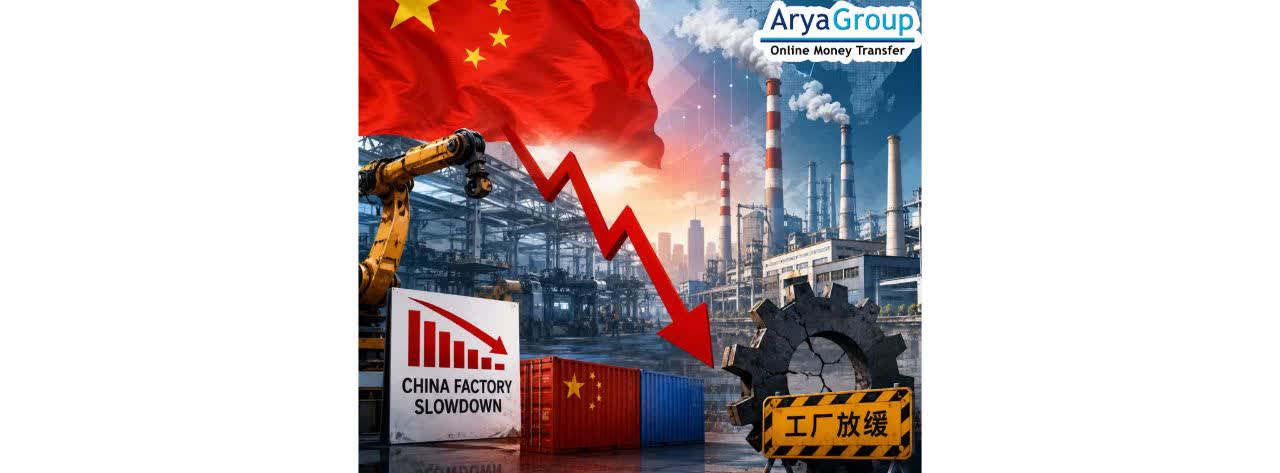
China's manufacturing sector continues to show signs of weakness, reinforcing concerns that the world's second-largest economy is losing momentum. Recent economic data indicates that factory activity has remained under pressure as domestic demand softens, exports face growing challenges, and businesses become increasingly cautious about future investment. The latest figures have renewed worries among economists and investors who are closely watching China's economic recovery.
Manufacturing has long been one of the main pillars of China's economy. For decades, the country has served as the world's largest manufacturing hub, producing everything from electronics and machinery to consumer goods and industrial equipment. However, several economic challenges have made it increasingly difficult for factories to maintain the strong growth experienced in previous years.
One of the biggest concerns is weaker consumer demand. Chinese households have become more cautious with spending as uncertainty over employment, wages, and the housing market continues. Lower consumer spending reduces demand for manufactured goods, forcing factories to scale back production and delay expansion plans.
Export demand has also slowed in recent months. Although China remains one of the world's largest exporters, slower economic growth in major markets such as the United States and Europe has reduced international demand for Chinese products. Higher borrowing costs in many countries and continued inflation have encouraged consumers and businesses worldwide to limit spending, directly affecting Chinese manufacturers.
Another challenge facing China's industrial sector is the ongoing weakness in the property market. The real estate industry has traditionally played a major role in driving demand for steel, cement, construction materials, household appliances, and other manufactured products. As property investment remains subdued, many industries connected to construction continue to experience slower business activity.
Business confidence has also weakened. Many companies remain cautious about hiring new employees or making significant capital investments until they see stronger signs of economic recovery. Smaller manufacturers, in particular, face increasing pressure from lower profit margins, rising competition, and uncertain market conditions.
Government officials have introduced several measures aimed at supporting economic growth, including targeted stimulus programs, infrastructure investment, and policies designed to encourage business activity. However, many analysts believe these measures have not yet produced a broad and sustained recovery across the manufacturing sector.
Financial markets closely monitor China's economic performance because of its influence on global trade. As one of the world's largest importers of raw materials, slower factory activity in China often reduces demand for commodities such as iron ore, copper, coal, and industrial metals. This can have significant effects on commodity-exporting countries and international financial markets.
The slowdown has also influenced currency markets. Investors often reassess expectations for the Chinese yuan when economic indicators weaken. At the same time, multinational companies that rely heavily on Chinese manufacturing or consumer demand carefully monitor economic developments to adjust production and investment strategies.
Despite current challenges, China's economy still benefits from several long-term strengths. The country has an extensive manufacturing infrastructure, advanced supply chains, a skilled workforce, and strong technological capabilities. These advantages continue to support China's position as one of the world's leading industrial economies.
Some economists believe the current slowdown may be temporary if policymakers introduce additional measures to stimulate domestic consumption and restore business confidence. Increased public investment, support for the housing sector, and policies aimed at encouraging consumer spending could help strengthen manufacturing activity over time.
Technology and innovation are also expected to play an increasingly important role in China's future economic growth. The government continues investing heavily in artificial intelligence, electric vehicles, renewable energy, advanced semiconductor manufacturing, and high-tech industries. These sectors could offset weakness in more traditional manufacturing industries over the coming years.
Nevertheless, uncertainty remains high. Global geopolitical tensions, changing trade policies, supply chain adjustments, and slowing worldwide economic growth continue to create risks for China's export-driven industries. Investors will closely monitor upcoming manufacturing data, retail sales, industrial production, and government policy announcements for clearer signals about the direction of the economy.
For global markets, China's economic performance remains extremely important. A stronger Chinese economy generally supports international trade, commodity prices, and business investment worldwide. Conversely, prolonged weakness in manufacturing could weigh on global economic growth and reduce demand across many industries.
Although recent factory data points to continued challenges, economists emphasize that China's long-term outlook will largely depend on the effectiveness of future policy measures, consumer confidence, and improvements in both domestic and international demand. The coming months are expected to provide a clearer picture of whether the economy can regain stronger momentum or continue facing slower growth.

Add New Comment