


Crypto Falls as Geopolitical Fears Rise
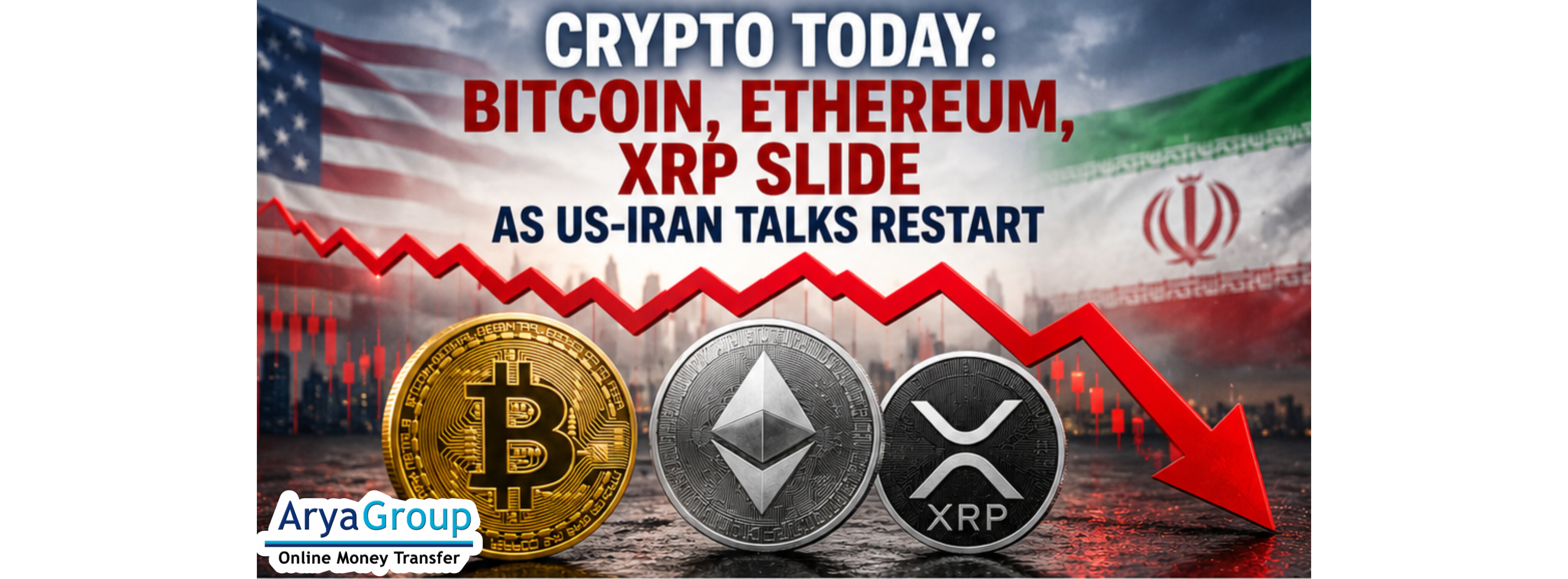
Recent weakness across the cryptocurrency market has been largely driven by renewed geopolitical uncertainty as negotiations between the United States and Iran resumed without delivering an immediate breakthrough. Investors had hoped that diplomatic progress would improve market sentiment, but uncertainty surrounding the talks instead contributed to a broader risk-off environment that pressured major digital assets. Bitcoin, Ethereum, and XRP all moved lower as traders reduced exposure to risk-sensitive investments and shifted toward safer assets.
Bitcoin has remained under significant pressure, falling toward the $70,000 region as investors reacted to ongoing geopolitical tensions, persistent ETF outflows, and weakening short-term market momentum. Several analysts noted that institutional demand has softened in recent weeks, with spot Bitcoin ETFs recording substantial withdrawals. This reduction in capital inflows has made it more difficult for Bitcoin to maintain its previous upward trajectory.
Ethereum has also struggled to find support, trading below the psychologically important $2,000 level. Continued outflows from spot Ethereum ETFs and cautious investor sentiment have weighed on the second-largest cryptocurrency. While Ethereum's long-term fundamentals remain tied to staking, decentralized finance, and tokenization trends, short-term price action continues to be influenced by broader macroeconomic and geopolitical developments.
XRP has not escaped the market-wide selloff either. Although recent ETF-related developments generated some optimism among investors, the token has continued moving lower as overall market sentiment deteriorated. Analysts point to declining momentum and increased selling pressure as key reasons behind XRP's recent weakness.
A major concern for traders is that geopolitical tensions often reduce appetite for speculative assets. When uncertainty increases, investors frequently move capital toward cash, government bonds, gold, or other perceived safe havens. Cryptocurrencies, despite their growing maturity, are still widely classified as risk assets and therefore tend to experience selling pressure during periods of heightened global instability.
The current market environment has been further complicated by large ETF outflows. Bitcoin funds have experienced billions of dollars in withdrawals over recent weeks, while Ethereum investment products have also seen continued net outflows. These developments suggest that institutional investors are adopting a more cautious stance while awaiting greater clarity regarding economic conditions and geopolitical risks.
Interestingly, the relationship between crypto markets and U.S.-Iran developments has been highly visible throughout 2026. Earlier periods of optimism regarding ceasefires and peace negotiations helped Bitcoin, Ethereum, and XRP rally sharply. However, whenever negotiations stalled or tensions escalated, digital assets quickly reversed course and moved lower. This pattern highlights the growing influence of global macroeconomic events on cryptocurrency valuations.
Despite the recent decline, many market observers view the current weakness as a sentiment-driven correction rather than evidence of a fundamental breakdown in the cryptocurrency sector. Adoption trends, institutional participation, blockchain innovation, and long-term investment interest remain largely intact. However, traders are likely to remain cautious until there is greater clarity regarding geopolitical developments and the direction of global monetary policy.
Looking ahead, investors will closely monitor further developments in U.S.-Iran negotiations, ETF fund flows, inflation data, and central bank policy decisions. These factors are expected to play a crucial role in determining whether Bitcoin, Ethereum, and XRP can stabilize and recover, or whether additional volatility lies ahead for the cryptocurrency market.
Add New Comment