


What Is Tangle in Cryptocurrency?
What Is Tangle in Cryptocurrency?
The world of cryptocurrency is mostly associated with blockchain, but not every digital-asset network uses a traditional chain of blocks. Tangle is a different type of distributed ledger developed for the IOTA ecosystem. Instead of placing transactions into blocks and arranging them in a single chain, Tangle uses a structure known as a Directed Acyclic Graph (DAG).
This alternative design was created to support a network where transactions can be processed in parallel and where users do not depend on traditional miners to add transactions to blocks.
What Is the Tangle?
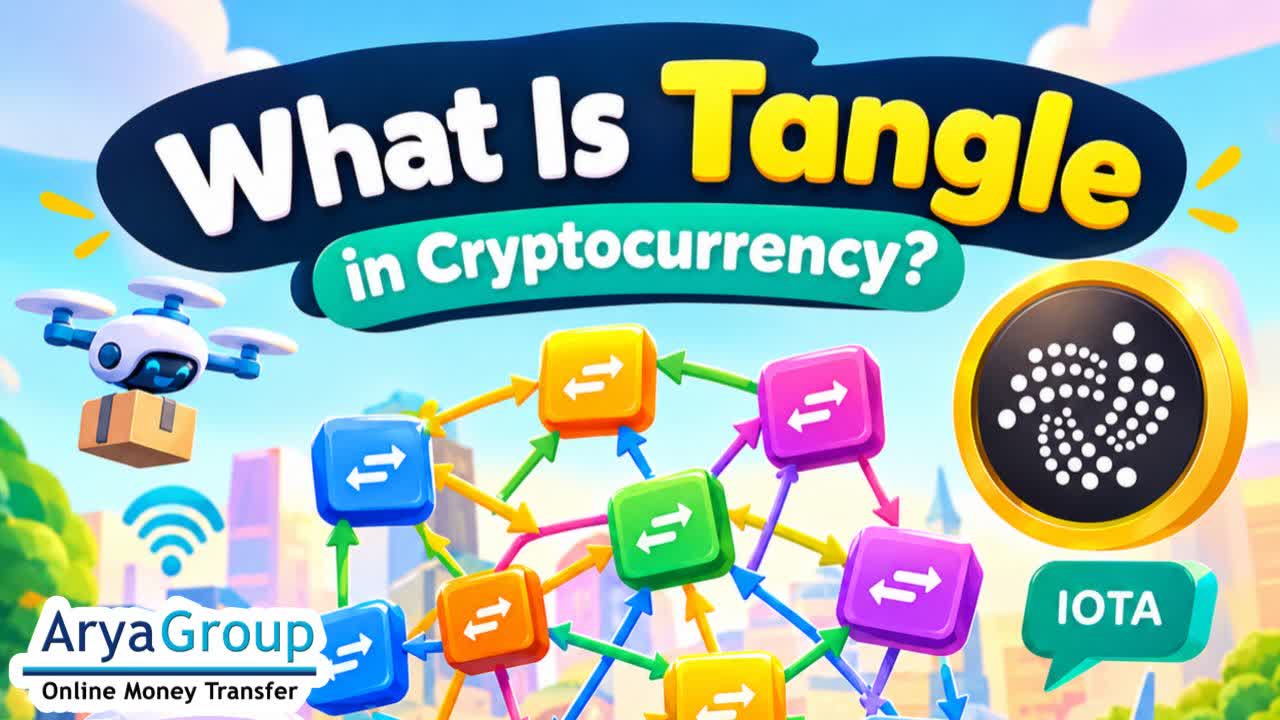
Tangle is the name commonly used for IOTA's DAG-based distributed ledger and protocol. In a traditional blockchain, transactions are grouped into blocks that are connected sequentially. Tangle takes a different approach: individual transactions or blocks can reference previous transactions, creating a web-like structure rather than one long chain.
The word "Tangle" comes from the way these transactions become interconnected. As more transactions are added, the network develops a growing graph of relationships.
How Does the Tangle Work?
When a new transaction is added to the Tangle, it references previous transactions. In the original Tangle design, a new transaction typically approved two earlier transactions. These approvals helped connect new activity to existing activity in the network.
This means that users are not simply waiting for a miner to collect their transaction and place it into a block. The transaction itself becomes part of the process through which the network validates activity.
Tangle and Directed Acyclic Graphs
A Directed Acyclic Graph, or DAG, is a mathematical structure made up of connected points and directional relationships. "Acyclic" means the structure does not form a circular path.
For Tangle, this structure allows multiple transactions to exist and be processed without forcing every transaction into one sequential blockchain. IOTA has described this architecture as a way to support parallel processing and reduce some of the bottlenecks associated with traditional blockchains.
Tangle vs. Traditional Blockchain
The main difference is the way transactions are organized.
A conventional blockchain generally groups transactions into blocks and connects those blocks into a chronological chain. Tangle instead uses interconnected transactions or blocks arranged as a DAG. This architectural difference can allow activity to take place in parallel rather than requiring every transaction to follow one single sequence.
Another important distinction is the role of miners. Tangle was designed around a model that does not rely on traditional mining as the mechanism for adding transactions to blocks. This was particularly relevant to IOTA's original goal of supporting small machine-to-machine payments and Internet of Things applications.
Why Is Tangle Important?
Tangle is important because it represents an alternative way of designing a distributed ledger. Rather than simply modifying the traditional blockchain model, IOTA built its network around a DAG structure intended to improve parallel processing, scalability and efficiency.
The technology has been closely connected with IOTA's vision of an economy in which machines, devices and applications can exchange data and value. Its architecture has also evolved over time as IOTA has developed newer approaches to consensus, congestion control and network operation.
What Are the Potential Benefits of Tangle?
One potential advantage of a DAG-based architecture is parallel processing. Because transactions do not all have to be organized into one sequential chain, different pieces of network activity can potentially be handled simultaneously.
Tangle was also designed with low-cost transactions in mind. IOTA's documentation and research materials have historically emphasized a fee-less architecture, particularly for applications involving frequent or small transactions.
Another area of interest is the Internet of Things. Connected devices may need to exchange very small amounts of data or value frequently. A distributed ledger designed for this type of activity could provide a useful foundation for machine-to-machine interactions.
Is Tangle the Same as IOTA?
No. IOTA is the network and ecosystem, while Tangle refers to the underlying distributed-ledger architecture and protocol associated with it.
It is therefore more accurate to say that IOTA uses Tangle technology rather than calling Tangle a separate cryptocurrency. IOTA's current documentation describes its technology as a programmable blockchain platform, while its earlier architecture and research extensively used the Tangle/DAG model.
What Are the Challenges of Tangle?
A different architecture does not automatically eliminate every technical challenge. Distributed networks still need reliable methods for reaching agreement, handling conflicting transactions, controlling congestion and maintaining security.
IOTA has developed different mechanisms for these issues over time. For example, IOTA 2.0 research describes congestion-control mechanisms designed to manage network demand and distribute access fairly.
This is why Tangle should be viewed as a technological approach rather than a guarantee of unlimited speed or perfect scalability.
Final Thoughts
Tangle is one of the most distinctive concepts associated with IOTA. Its DAG-based structure differs from the traditional blockchain model by connecting transactions in a graph instead of relying exclusively on a single chain of blocks.
The main idea is simple: create a distributed ledger capable of processing network activity in a more parallel and flexible way. While the technology has evolved significantly, Tangle remains an important part of understanding the history and architecture of IOTA.

Add New Comment