


What Is a Sandwich Attack?
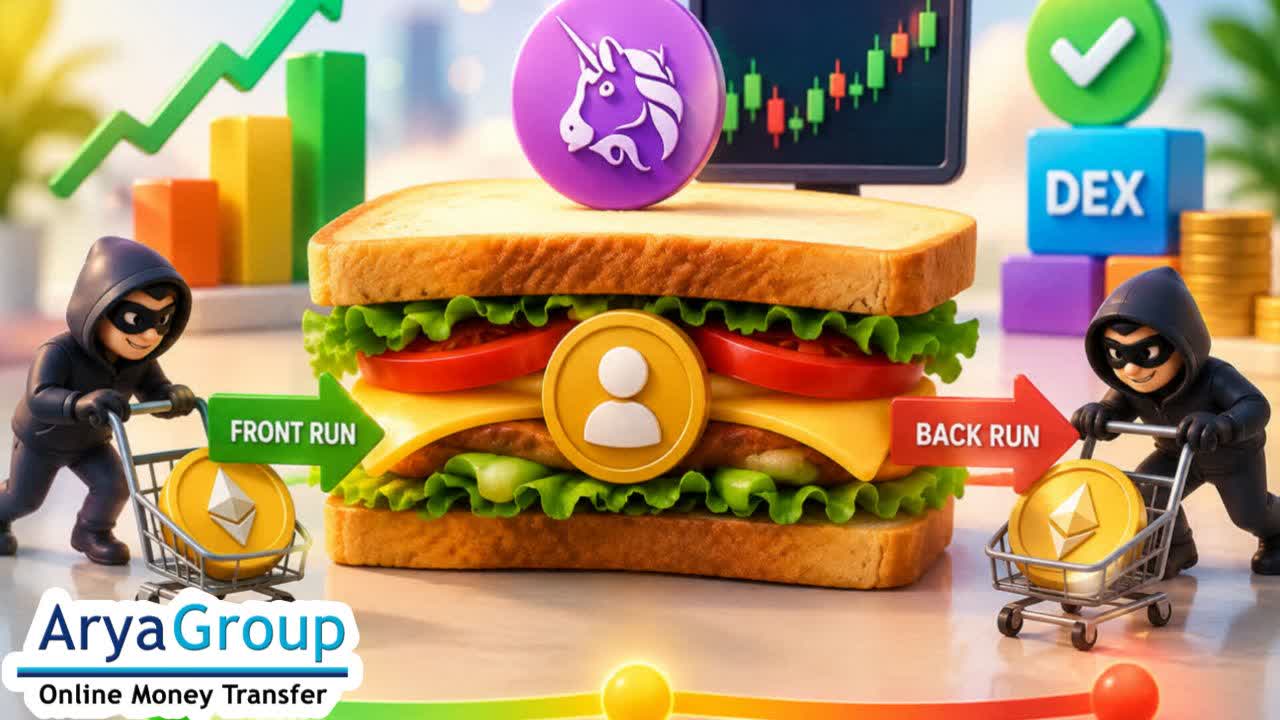
What Is a Sandwich Attack in Cryptocurrency?
A sandwich attack is a type of blockchain trading manipulation that can happen on decentralized exchanges (DEXs). It takes advantage of the way transactions are publicly visible and processed, particularly when a trader places a large swap that can influence an asset’s price.
The attacker attempts to position transactions around the victim’s trade. The goal is generally to benefit from the price movement created by the victim’s transaction, while the victim receives a less favorable execution price.
How Does a Sandwich Attack Work?
A sandwich attack gets its name because the victim’s transaction is effectively placed between two transactions controlled by the attacker.
At a high level, the sequence looks like this:
Attacker transaction → Victim transaction → Attacker transaction
Before the victim's trade is executed, the attacker may place a transaction that changes the market conditions. The victim's transaction then executes at a different price than expected. The attacker subsequently makes another transaction to take advantage of the resulting price movement.
The exact mechanics depend on the blockchain, decentralized exchange, liquidity model, and transaction-ordering system involved.
Why Are Decentralized Exchanges Vulnerable?
Many decentralized exchanges use automated market makers (AMMs) rather than traditional order books. In an AMM, the price of an asset can change as traders add or remove tokens from a liquidity pool.
This means a sufficiently large trade can affect the pool's balance and consequently influence the execution price of subsequent trades.
Public transaction information can make this behavior easier to observe. In some blockchain environments, specialized participants monitor pending transactions and attempt to identify profitable opportunities.
What Happens to the Victim?
The main problem for the victim is price execution.
A trader may submit a swap expecting to receive a certain amount of cryptocurrency. However, if another transaction changes the pool's price before the victim's transaction is processed, the victim may receive fewer tokens than expected, subject to the trade's slippage settings.
The difference can appear small for an individual transaction, but repeated attacks across many trades can represent a meaningful cost for users.
The Role of Slippage
Slippage is the difference between the expected execution price and the actual price received.
Some degree of slippage is normal, particularly when markets are volatile or liquidity is limited. However, setting a very high slippage tolerance can potentially give an attacker more room to manipulate the execution environment.
This is one reason traders should understand the risks associated with decentralized trading rather than assuming that a displayed market price is guaranteed.
Why Is a Sandwich Attack Profitable?
The basic economic idea is relatively simple: the attacker attempts to benefit from a price change caused by another trader's transaction.
Large swaps can have a greater impact on liquidity pools, particularly when liquidity is relatively low. Consequently, transactions involving substantial price impact can attract more attention from automated trading systems.
However, sandwich attacks are not guaranteed to be profitable. Transaction fees, competition between attackers, market movements, failed transactions, and changing liquidity conditions can all affect the outcome.
MEV and Sandwich Attacks
Sandwich attacks are commonly discussed as a form of MEV, or Maximal Extractable Value.
MEV refers broadly to value that can be extracted by influencing transaction ordering or inclusion within a blockchain's transaction-processing system.
Not all MEV is harmful. Some forms can improve market efficiency or provide useful infrastructure. Sandwich attacks, however, are generally viewed negatively because the strategy can impose an unfavorable execution price on another trader.
Why Are Sandwich Attacks a Concern?
Sandwich attacks raise concerns about fairness, market quality, and user protection in decentralized finance.
A trader may believe they are interacting directly with a transparent and permissionless market. Yet transaction-ordering dynamics can create an environment where sophisticated automated participants have an advantage over ordinary users.
This can increase the effective cost of trading and may discourage people from using decentralized exchanges.
How Can Users Reduce the Risk?
There is no universal solution that completely eliminates sandwich attacks. However, users and decentralized trading platforms can take measures that may reduce exposure.
Use Appropriate Slippage Settings
Keeping slippage tolerance appropriate for the trading conditions can reduce the amount of room available for unfavorable execution.
Consider Trading Infrastructure Carefully
Some trading interfaces and protocols use mechanisms designed to reduce transaction-ordering risks. Users should understand how a particular service handles transaction submission and execution before trading.
Improve Market Liquidity
Greater liquidity can reduce the price impact of individual trades. Although liquidity does not automatically eliminate sandwich attacks, deeper markets can make certain forms of price manipulation less attractive.
The Bigger Picture
Sandwich attacks demonstrate an important characteristic of blockchain markets: transparency does not automatically mean fairness.
Public transaction data is one of blockchain technology's major features, but that transparency can also create opportunities for sophisticated market participants to react to pending activity.
As decentralized finance continues to develop, researchers and developers are working on better transaction-ordering systems, private transaction mechanisms, and other approaches designed to create a fairer trading environment.
Final Thoughts
A sandwich attack is essentially a form of transaction-ordering manipulation in which an attacker attempts to place transactions around another user's trade to benefit from the resulting price movement.
Understanding the concept is important for anyone learning about decentralized finance, because it highlights the relationship between MEV, liquidity, slippage, automated market makers, and blockchain transaction ordering.
The broader lesson is that cryptocurrency trading involves more than simply watching an asset's quoted price. The way transactions enter and move through a blockchain can also influence the final outcome.
Add New Comment