


CCIP: Connecting Blockchains
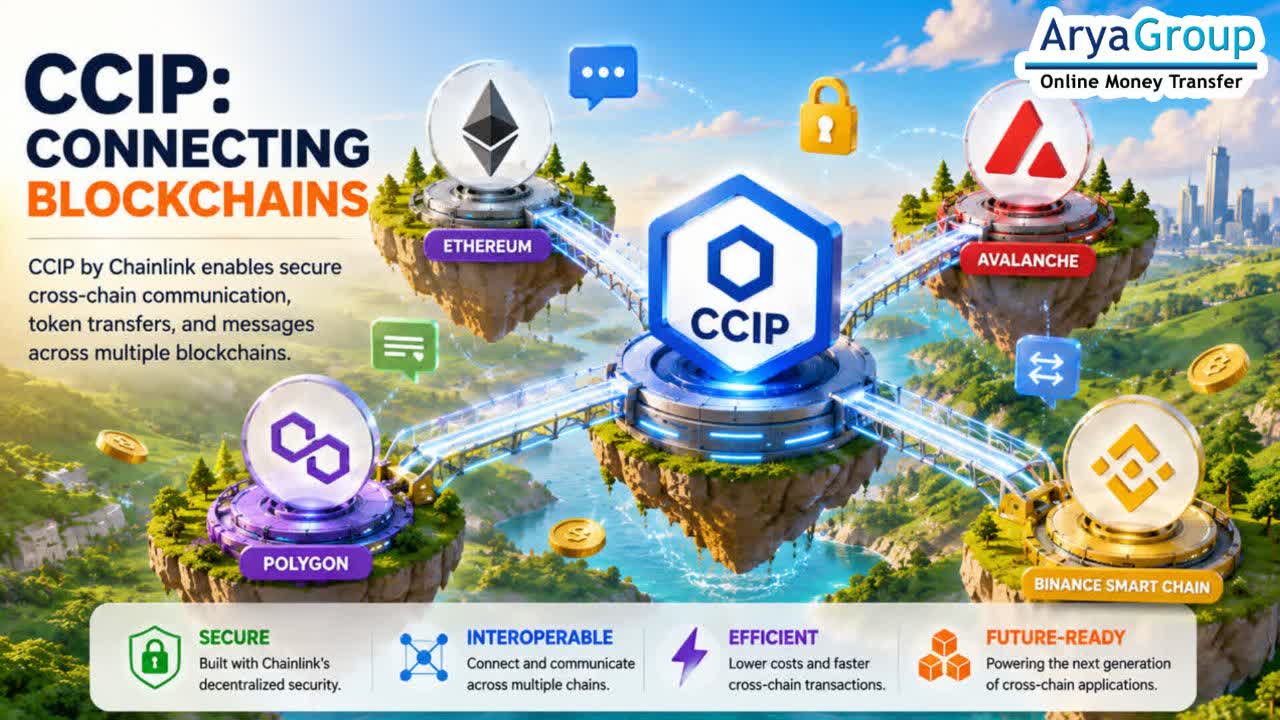
CCIP: Connecting Blockchains
What Is Cross-Chain Interoperability Protocol?
The Cross-Chain Interoperability Protocol (CCIP) is a blockchain infrastructure designed to allow different blockchain networks to communicate with one another. Developed by Chainlink, CCIP enables applications to send messages, transfer tokens, and exchange information across supported blockchain networks.
Blockchains are generally independent ecosystems. Ethereum, Avalanche, Arbitrum, and other networks have their own infrastructure, smart contracts, and rules. Without interoperability technology, moving information or assets between these networks can be complicated.
CCIP aims to solve this problem by providing a standardized communication layer between blockchains.
Why Blockchain Interoperability Matters
The cryptocurrency industry contains many independent blockchain networks, each designed for different purposes. Some focus on decentralized finance, others on gaming, payments, tokenization, or smart contracts.
However, these ecosystems cannot naturally communicate with one another. This creates what is often called blockchain fragmentation.
Interoperability can reduce this fragmentation by allowing applications and assets to interact across multiple networks. Instead of building completely separate systems for every blockchain, developers can use cross-chain infrastructure to connect their applications.
How CCIP Works
At a basic level, CCIP acts as a communication framework between blockchain networks.
A simplified process looks like this:
Source Blockchain → CCIP Infrastructure → Destination Blockchain
An application can initiate a cross-chain request on one network. CCIP's infrastructure helps transmit and verify the relevant message before the destination blockchain processes the request.
The system is designed to support both token transfers and arbitrary messages, meaning developers can create applications that communicate across chains rather than simply moving cryptocurrency.
Cross-Chain Token Transfers
One important use case for CCIP is transferring tokens between blockchain networks.
For example, a user could interact with an application on one blockchain and initiate a transfer of supported assets to another network. CCIP provides the infrastructure required to coordinate the cross-chain process.
This can be useful for decentralized finance applications, stablecoins, tokenized assets, and other blockchain-based financial products.
Cross-Chain Messaging
CCIP is not limited to transferring tokens. Its messaging functionality allows smart contracts on different blockchains to communicate.
For example, an application on one network could send instructions or information to a smart contract operating on another network. This opens the door to applications that function across several blockchain ecosystems.
CCIP and Blockchain Security
Security is one of the most important issues in cross-chain technology. Historically, some blockchain bridges have experienced serious security incidents, making bridge security a major concern for the cryptocurrency industry.
CCIP was designed with a security architecture that uses Chainlink's decentralized oracle infrastructure and additional risk-management mechanisms.
Decentralized Infrastructure
Chainlink operates a decentralized network of oracle nodes that can provide data and services to blockchain applications.
For cross-chain communication, decentralized infrastructure can reduce dependence on a single centralized intermediary. Multiple independent components participate in the process, helping improve reliability and security.
Risk Management
CCIP also incorporates additional safeguards intended to detect unusual activity and limit the impact of potential attacks.
These mechanisms are particularly important because cross-chain systems can become attractive targets when they handle valuable digital assets.
Security, however, is never absolute. Users and developers still need to evaluate smart contracts, supported networks, token implementations, and the specific risks associated with any cross-chain application.
Main Uses of CCIP
CCIP can support several areas of the cryptocurrency and blockchain industry.
Decentralized Finance
DeFi applications can use cross-chain communication to expand beyond a single blockchain. Users could potentially interact with financial services across multiple networks while applications coordinate the necessary cross-chain messages.
Stablecoins and Payments
Stablecoins are another important use case. Cross-chain infrastructure can help issuers and applications make their tokens available across multiple blockchain ecosystems.
This can make digital payments and blockchain-based financial services more flexible.
Tokenized Real-World Assets
Banks, financial institutions, and blockchain companies are increasingly exploring the tokenization of assets such as securities and other financial instruments.
Cross-chain interoperability could allow tokenized assets and related applications to operate across different blockchain environments instead of being restricted to one network.
CCIP vs. Traditional Blockchain Bridges
Traditional blockchain bridges often focus primarily on moving assets from one network to another. CCIP takes a broader approach by supporting both cross-chain messaging and token transfers.
The distinction is important because future blockchain applications may need to exchange instructions and information, not simply move tokens.
Rather than viewing each blockchain as an isolated network, interoperability protocols aim to create an interconnected blockchain ecosystem.
Why Developers May Use CCIP
For developers, a standardized cross-chain framework can simplify the process of creating applications that operate across multiple networks.
Instead of developing an independent communication system for every blockchain connection, developers can build around established interoperability infrastructure where supported.
The Future of Cross-Chain Technology
As the blockchain industry grows, interoperability is likely to become increasingly important. Users do not necessarily want to choose a blockchain based solely on where their assets or applications were originally created.
A more interconnected ecosystem could allow blockchains to specialize while still communicating with one another.
CCIP's Role in the Crypto Ecosystem
The Cross-Chain Interoperability Protocol represents an attempt to create secure and standardized communication between blockchain networks. By supporting token transfers and cross-chain messaging, CCIP can help developers build applications that are less dependent on a single blockchain.
Ultimately, the importance of CCIP will depend on adoption, security, network support, developer usage, and the continued growth of cross-chain applications. If blockchain ecosystems become increasingly interconnected, technologies such as CCIP could play an important role in shaping the next generation of cryptocurrency infrastructure.
Add New Comment